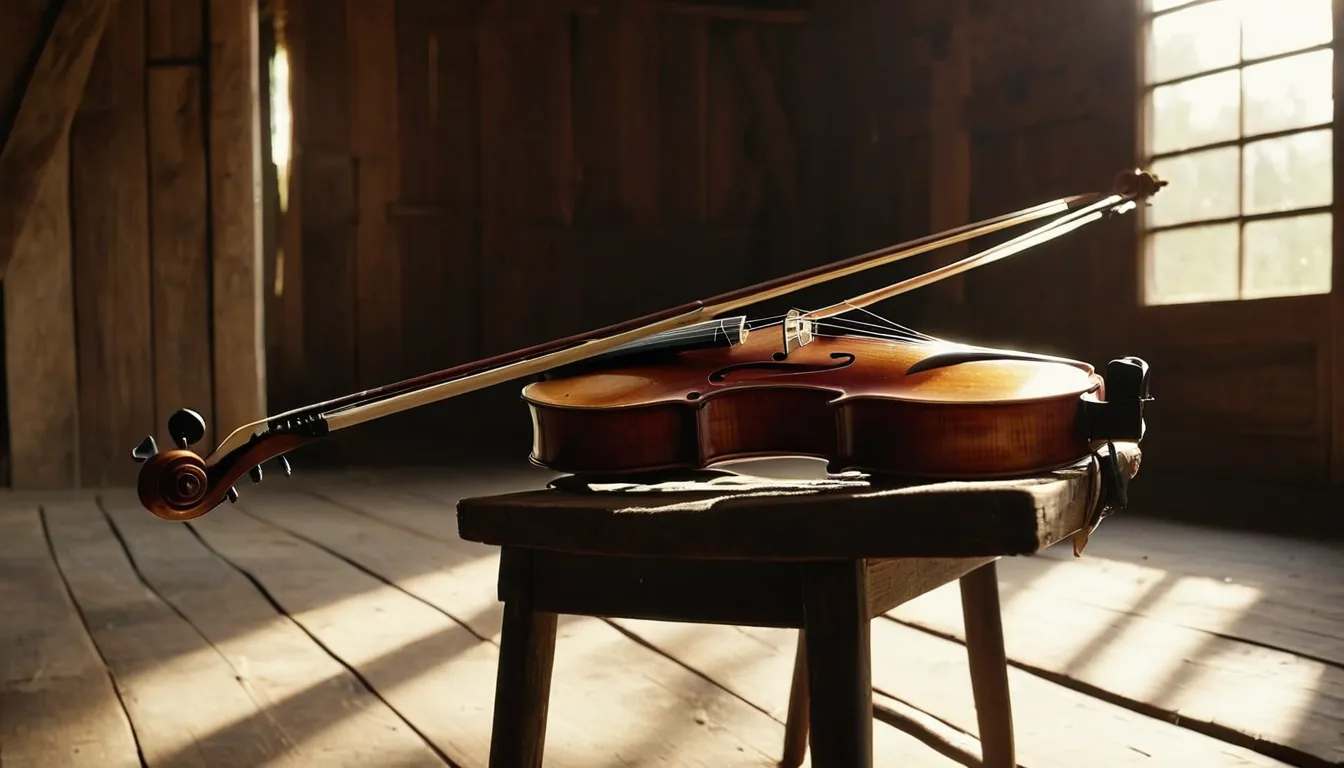
Same instrument, different habits
Physically, a fiddle and a violin are the same: four strings, a carved wooden body, and a bow strung with horsehair. Folk players sometimes set up the instrument differently, for example with a slightly flatter bridge that makes it easier to play two strings at once. Many also hold it differently. Some rest it lower on the chest or the arm instead of under the chin, which works fine for dance music that stays in the lower positions on the neck.
Playing for dancers
Dance fiddling is about rhythm first. Dancers need a steady pulse they can feel, so fiddlers lean on the beat with their bow, adding small accents and pulses that make the tune lift. The same tune can be played smoothly for listening or with a strong, driving bow for a crowded dance floor.
In polka bands the fiddle may carry the melody, play harmony with an accordion or clarinet, or add short phrases between vocal lines. In many central European village bands, two or more fiddles played tune and harmony, with a bass instrument underneath.
Bowing styles
- Shuffle bowing: repeated short bow patterns that give old-time and country fiddling its rocking feel.
- Slurs across the beat: several notes in one bow, which shifts accents and adds swing.
- Double stops: playing two strings at once, often an open string next to the melody, for a fuller sound.
- Ornaments: quick grace notes, rolls and slides, which differ from one tradition to another.
Tunings
The standard tuning, G D A E from lowest to highest, works for most polka and folk tunes. Some traditions, especially American old-time music, also use cross tunings, where strings are retuned to suit a key. Common examples are A E A E and A D A E. These let open strings ring with the tune and make double stops easier. Change tunings gradually and check the strings for wear, since retuning often stresses them.
Learning to fiddle
- Get an instrument that fits. Children and smaller adults may need a smaller size. A teacher or a reputable string shop can help you size it.
- Learn to hold the bow and draw a straight, even stroke on open strings. This takes time and is worth it.
- Pick simple tunes from the tradition you like and learn them by ear, a phrase at a time.
- Play along with recordings, then with other people. Slow sessions for learners exist in many areas; see the finding groups guide.
- Learn the dance that goes with your tunes. Knowing the polka step or the waltz box helps you feel the rhythm the dancers need.
Looking after a fiddle
Wooden instruments react to heat and humidity. Keep the fiddle in its case away from radiators, direct sun and hot cars. Loosen the bow hair after playing, wipe rosin dust off the strings and body, and take cracks, a leaning bridge or open seams to a qualified repair person. Never try to glue a crack yourself.
Long practice sessions can strain the neck, shoulders and wrists. Take breaks, keep your posture relaxed and see a teacher about your setup if something hurts. Ongoing pain is a reason to see a doctor or a physical therapist.